Why Andrew F. Walls Matters for Today’s Church
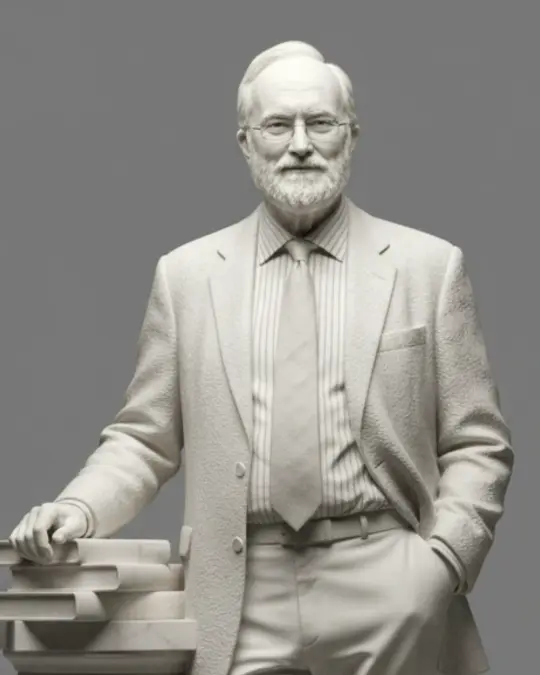
In a world increasingly global and multicultural, the legacy of Andrew F. Walls calls us to see the gospel’s reach beyond Western horizons. As a scholar-missionary whose life spanned Europe and Africa, Walls helped reshape how Christians understand the spread of Christianity worldwide. His conviction that the center of Christianity was shifting southward challenged centuries of Western-centered assumptions, inviting believers to recognize and honor vibrant faith in Africa, Asia, and Latin America—and to support missions with fresh humility and global vision.
The Challenges of Crossing Cultures and Academic Paradigms
Walls’s journey began with a traditional theological education at Oxford, but in 1957 he responded to a call to teach in Sierra Leone—at a time when many viewed African Christianity as a pale imitation of its European counterpart. Christianity Today+1 Entry into colonial-era Africa meant grappling not only with cultural distance but also with racism, colonial prejudice, and a condescending view of “native churches.” As Walls later confessed, he originally approached Africa with the lens of early-church patristic texts—until one day it struck him that he was “living in a second-century church.” Christianity Today+1

That realization was costly: abandoning Eurocentric scholarship, he redirected his vocation, navigating academic resistance from those committed to traditional church history, and wrestled with the challenge of documenting non-Western Christianity—churches that were vibrant but lacked preserved records, institutional recognition, or the prestige once accorded to European church history.
Contributions: Founding the Study of World Christianity & Elevating African Churches
Walls’s contributions are profound and far-reaching. Recognizing that Christianity was no longer primarily Western, he founded the Centre for the Study of Christianity in the Non-Western World (CSCNWW), initially at the University of Aberdeen and later relocated to the University of Edinburgh. School of Divinity+1 He also established pioneering journals such as the Journal of Religion in Africa, giving voice to African Christian scholarship long ignored by Western academia. Asociación Africana de Religiones+1
Through his writings — for instance in his seminal work The Missionary Movement in Christian History — Walls introduced the “indigenizing” or “translation” principle: the idea that the gospel must be translated culturally, not only linguistically, in order to bear fruit among different peoples. Missio Dei Journal+1 His approach legitimized non-Western expressions of Christianity, affirming that African churches, Asian churches, Latin American churches — with their own history, theology, worship, and vitality — are not peripheral, but central to global Christianity’s present and future.
Spiritual Role: Bridge-Builder, Mentor, Visionary of a Truly Global Church
More than an academic, Walls was a diplomat and bridge-builder between cultures. He mentored generations of African theologians and missionaries, many of whom now lead churches, seminaries, and mission movements worldwide. Christianity Today+1 His gentle humility, personal warmth, and deep convictions allowed him to speak truth with compassion, building unity across continents, languages, and traditions. As one former student said, his “magnum opus is people.” Christianity Today+1
In many ways, Walls helped early-twenty-first-century churches begin to think globally, not just geographically — to understand that God’s mission is not a Western export, but a worldwide reality, deeply embedded in local cultures.
Transforming Communities: From Western Hegemony to Global Christian Diversity
The impact of Walls’s work continues to be felt today. Thanks to him, academic institutions now study “world Christianity” as a legitimate, vital discipline. Churches across Africa, Asia, Latin America — once dismissed or ignored — are now seen as essential to the global body of Christ. The shift from a Eurocentric ecclesial vision to a polycentric, global Christianity has encouraged churches in the West to humbly support global mission, recognize their brothers and sisters worldwide, and partner in gospel work with respect and mutual learning. Diccionario de Biografía Cristiana Africana+1
By acknowledging the value of indigenous church expressions, Walls helped communities previously marginalized — socially, racially, geopolitically — find dignity and belonging in the global church. He helped Christians worldwide see that the Great Commission is not a Western burden, but the universal calling of Christ’s body.
Conclusion: Carry Forward the Torch — Support Global Mission Today
Andrew Walls shows us that missionary work is not only about crossing physical frontiers — but also intellectual, cultural, and ecclesial ones. His life calls us to humility, to global vision, and to the conviction that the gospel belongs to every people and culture.
If you are moved by his legacy and want to join in supporting the ongoing global mission of Christ — in Africa, Asia, Latin America, and beyond — I encourage you to visit GlobalOne80.org. There you can meet modern missionaries, hear their stories, and contribute toward gospel efforts that build communities, transform cultures, and honor the diverse tapestry of Christ’s church worldwide.